Sound familiar?Toronto
- The call
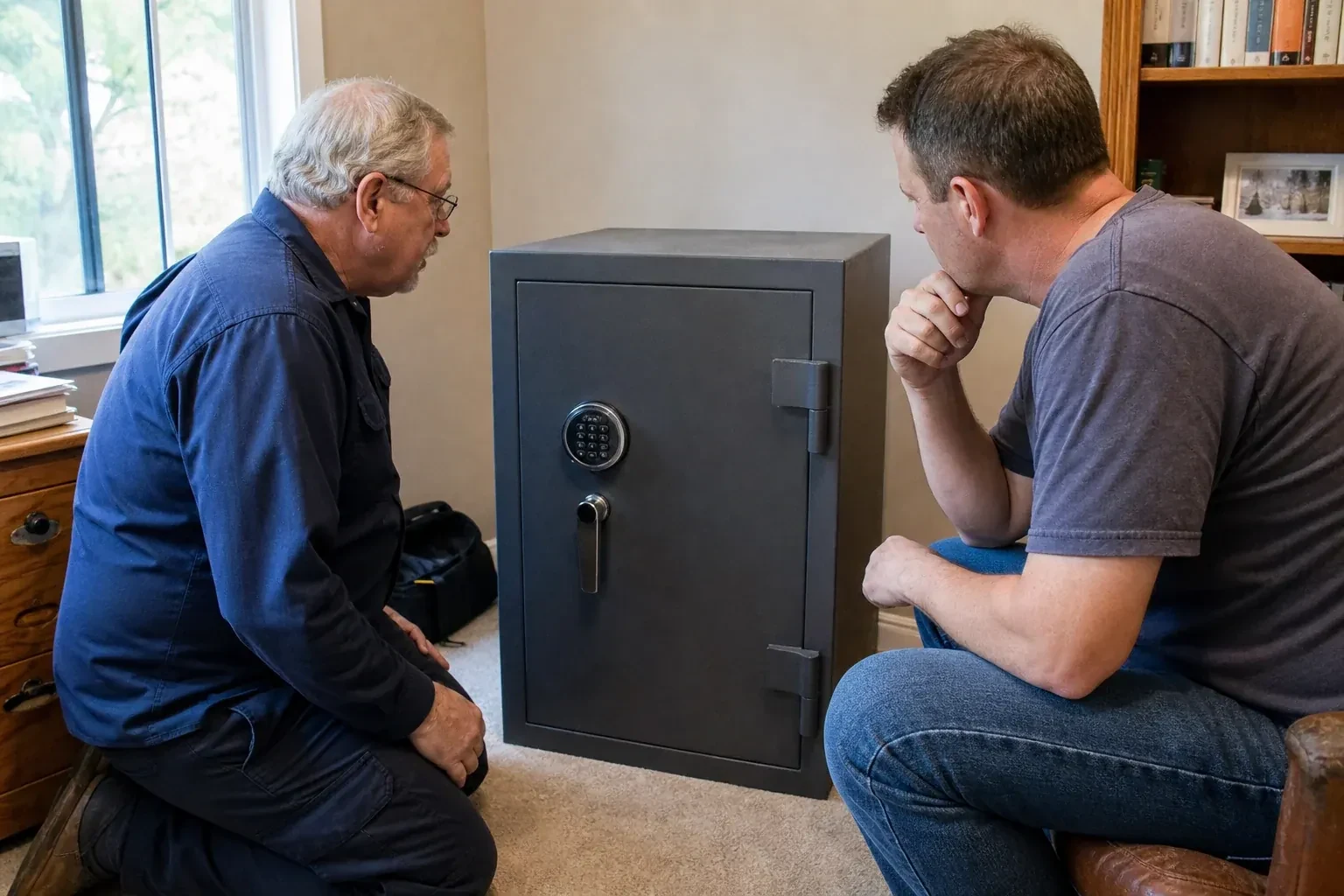
- The office is moving three blocks over, and the old commercial safe that has sat bolted to the concrete for fifteen years now needs to come out, travel across town, and go back down just as solidly.
Businesses call for this service for two different reasons that sometimes overlap: protecting cash held overnight, and protecting paper records that would be enormously slow to recreate. The two priorities point toward different construction, since a cash-rated body resists tools while a document-rated interior resists heat and holds its temperature down through a timed fire test. Servicing an existing unit follows the same split: bolt-work and lock mechanics get physical attention, while any fire-rated lining is checked for the trapped moisture that builds up behind an airtight seal.
Sound familiar?Toronto
Safe Installation & Servicing · Toronto
Scene 1
A safe tucked into a spot nobody can reach easily gets used less often than intended, and one left in plain view of every visitor invites attention it does not need. The locksmith talks through how often the safe will be opened, by how many people, and at what time of day, since a till safe opened every hour wants a different position than a document safe opened twice a year. Concealment behind a panel or inside a closet is weighed against how practical daily access needs to stay.
Scene 2
The visit begins by separating two decisions that people often blur together. Some burglary ratings come from an independent lab timing how long a trained attempt with real tools takes to force the door, expressed in minutes of net working time; others are construction classifications based on steel thickness and body design rather than a timed attack. A fire rating comes from a timed furnace test that measures how hot the interior gets, expressed as a temperature ceiling held for a set number of hours. A unit is chosen, or confirmed if it is already owned, against both numbers separately rather than a single vague idea of how secure a safe looks.
Scene 3
The final combination or code is set by the owner alone, after the locksmith has finished testing, so nobody who did the installation carries it away in their head. Writing it down somewhere other than beside the safe, or storing it with a trusted person away from the property, is worth doing once rather than relying on memory during a stressful moment. Where the lock supports more than one code, deciding now who else should have one avoids an awkward conversation later.
What shapes the quoteNorth Park Locksmith Co.
FeesSame any hour
Most electronic locks give a low-battery warning, usually a beep or flashing light, well before they actually stop working, and replacing the battery within that same week is the safer habit rather than waiting. Depending on how often the safe is opened, a battery commonly lasts somewhere between one and several years, and keeping a spare of the correct type near the safe avoids a search once the warning starts.
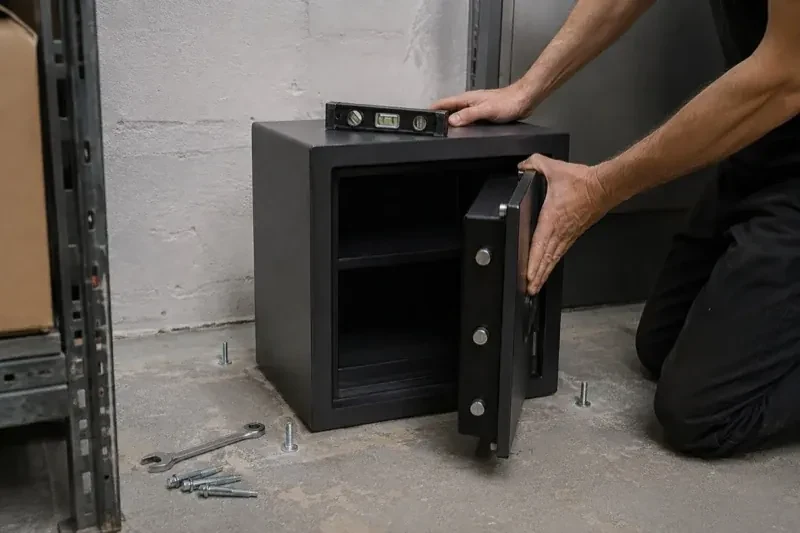
Anchoring leaves small holes at the anchor points, sized to the bolts being used, and on a finished floor these sit under the safe itself where they are never seen again. On tile, the risk of cracking nearby tiles is real enough that an alternative fastening point or a different spot in the room is often chosen instead of drilling straight through the tile itself.
A fire-rated interior works by sealing tightly, and that same seal traps ordinary household humidity over time with nowhere to go. Opening the door for a few hours every few weeks lets trapped air exchange with the room, and a desiccant packet inside absorbs moisture between those openings if it is refreshed on schedule. A musty smell or a soft-feeling document is the interior telling you it needs airing out.
TorontoOntario
Safe Installation & Servicing · Downsview, North Park
Every square is one home in a hundred.
On-site assessment
The keypad on the office safe blinks a low-battery warning every morning now, and whoever notices it first quietly hopes someone else deals with it before the batteries finally give out mid-week.
(289) 536-9733, open 24/7.
On-site assessment preferred · (289) 536-9733, open 24/7