Sound familiar?Toronto
- The call
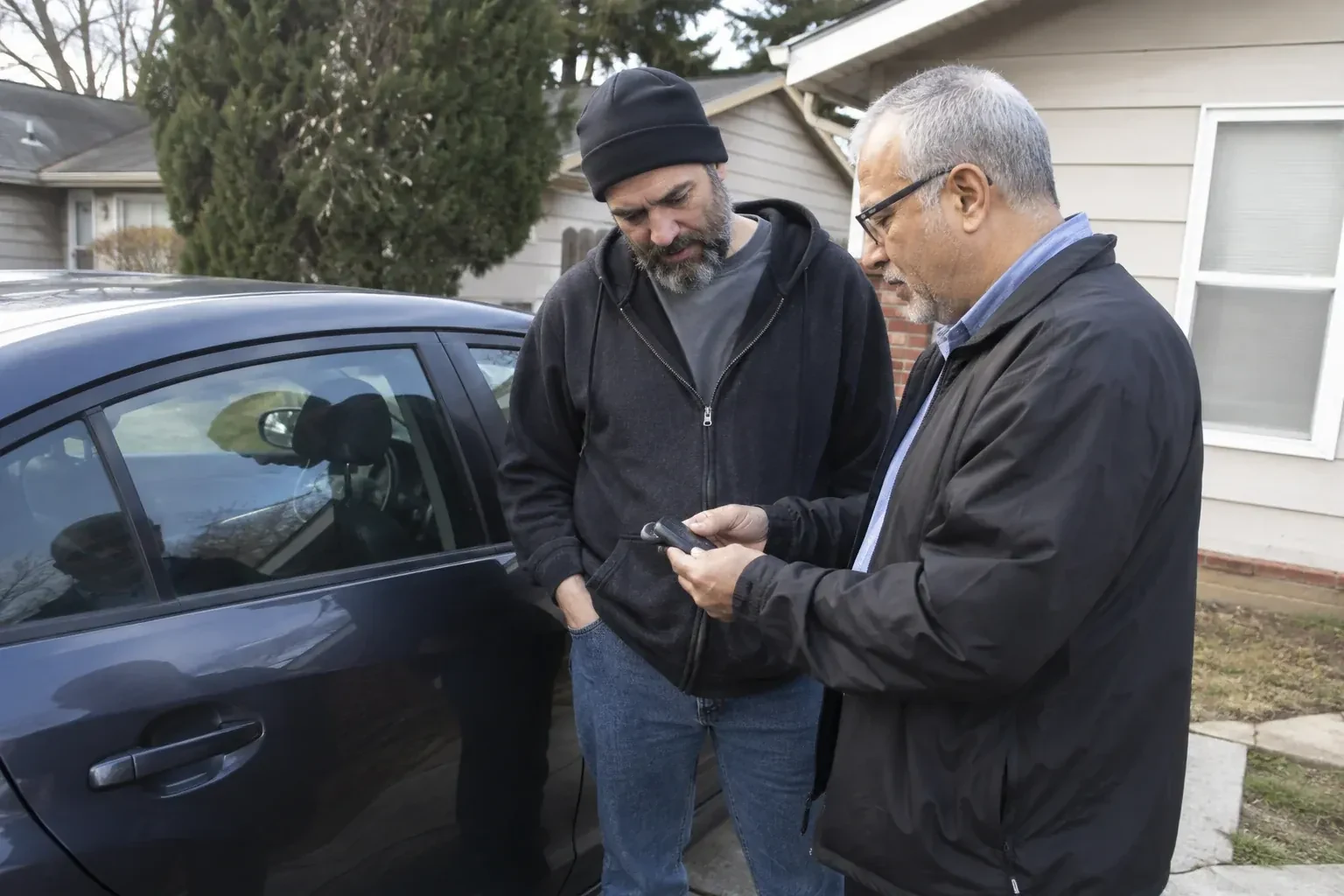
- You bought the car privately and it came with a single key on a shoelace. Every time it leaves your hand you notice, and you would like a second one made before the first goes missing.
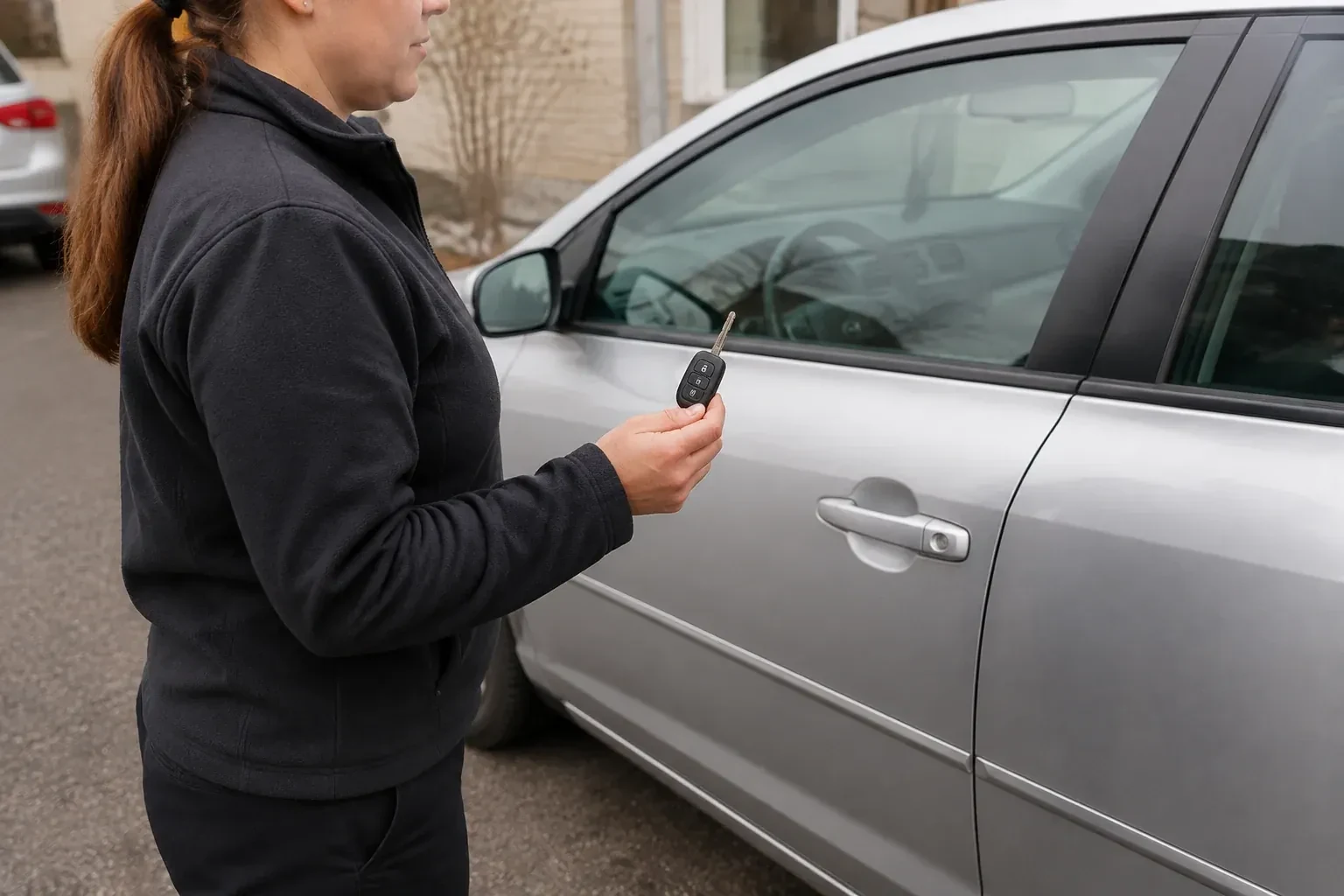
The engine cranks, catches for a second and dies, and a small key-shaped light keeps blinking on the dash. The blade turns the ignition and the doors perfectly well, but the car has stopped recognizing the chip inside the key.
Older vehicles without an immobilizer are a pleasure to key, but whether a given car has one is checked rather than assumed from age, since several early-2000s vehicles already shipped with a factory immobilizer. Where a car genuinely needs only a blade, it is cut to the factory code or to a reading of the lock rather than copied from a worn original, so it seats cleanly in an ignition that has seen twenty winters. Where the ignition wafers are tired, the locksmith can say so and service the cylinder in the same visit. The result is a key that turns like the car was new, without the daily jiggle.
Sound familiar?Toronto
Car Key Replacement · Toronto
Scene 1
Some vehicles hand over their security data readily; others require a PIN pulled from the car, a code from the manufacturer, or a procedure only the dealer's tooling can run. The locksmith confirms which applies to your VIN before committing to a key, and confirms the part is available: fobs are specific to frequency, part number and sometimes trim level, and a wrong one programs and then refuses to work the doors. For the systems that use manufacturer secure data, access is arranged through the industry's Vehicle Security Professional registry, which is why the ownership record is completed properly first. Nothing is cut until this line-up is clear.
Scene 2
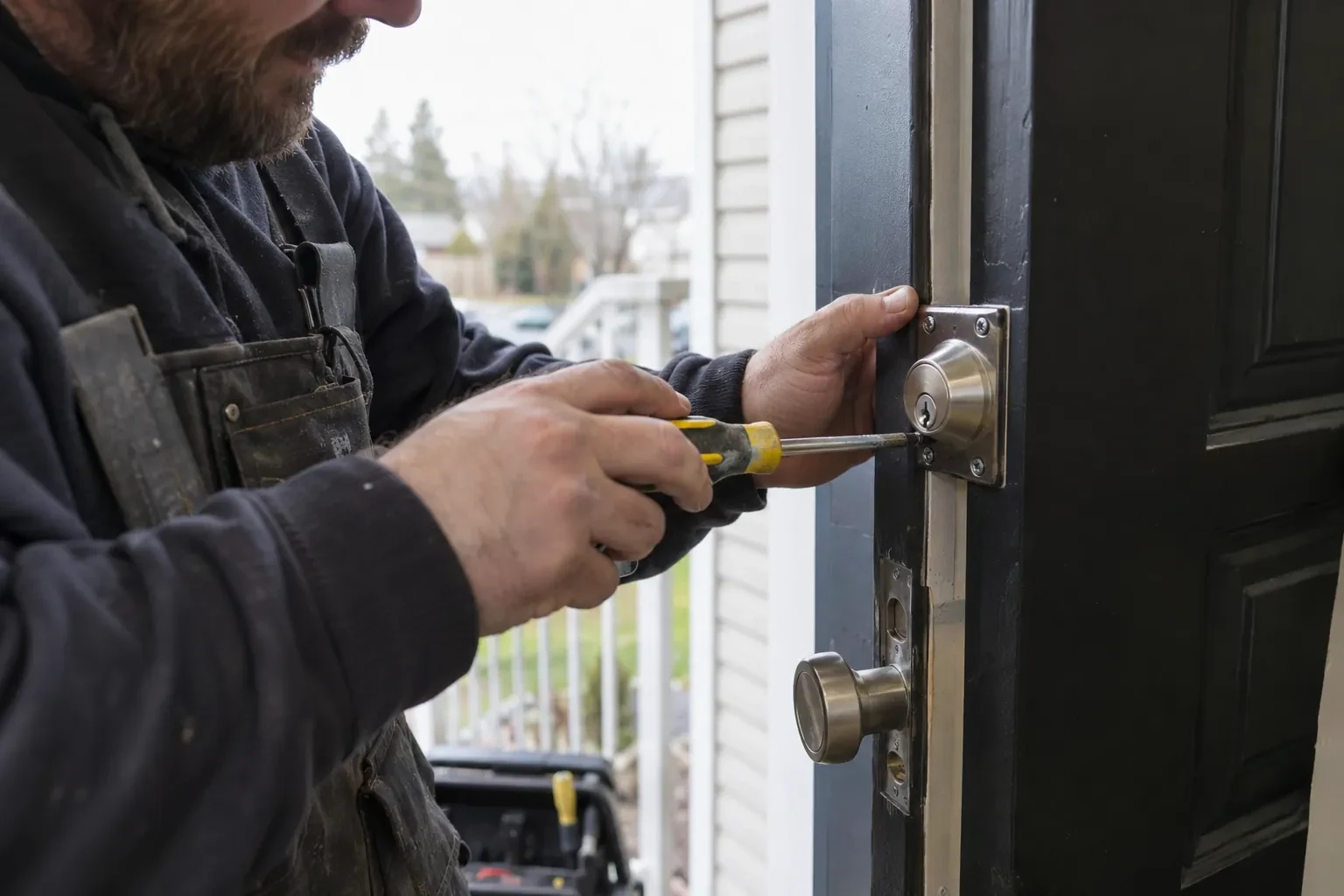
With the blade cut, the electronic half of the job begins. On a vehicle with OBD-programmable keys, the locksmith connects a programming tool to the diagnostic port under the dash, selects the exact vehicle and immobilizer system, and starts a session that introduces the new transponder to the car. Some systems accept the key in moments; others enforce a security wait timer, or ask for a PIN that the tool reads from the vehicle or that is obtained through the manufacturer's secure-data route. The key is cycled in the ignition or held to the start button when prompted, and the tool confirms the number of keys the car now recognizes.
Scene 3
A car key has an identity of its own: a blade profile, a transponder type, a remote frequency and a part number, and sometimes a key code printed on a tag. The locksmith notes these for you, along with the count of keys stored in the car, so the next spare can be prepared from the details rather than from scratch. Keep the note with your insurance papers rather than in the car. If the vehicle ever changes hands, the record also lets the new owner have the old keys erased and fresh ones made without guesswork about what the car uses.
What shapes the quoteNorth Park Locksmith Co.
FeesSame any hour
Often, yes, for vehicles with a supported conventional key system: the car is opened, a blade is produced by decoding the door lock or retrieving the factory key code, and the immobilizer is reset so the missing keys are erased before new ones are stored. A key-card or phone-key vehicle, or one needing a dealer procedure, follows its own route instead, which is why the VIN is asked for on the first call.
Adding a spare uses an existing working key as the reference: the new blade is cut and checked against it, and the immobilizer is asked to accept one more key alongside the old. Replacing all keys starts with nothing: the lock is decoded for a blade, and the immobilizer is reset to forget every previous key before new ones are stored. The second job is longer and sometimes needs manufacturer data, one more reason to keep a spare.
Adding a key leaves the existing keys in place; the car simply learns one more. The exception is a deliberate all-keys-lost reset or an erase you ask for, which clears every stored key and then registers only the ones you present. For that reason the locksmith asks you to bring every key you own to the visit, so each one can be re-registered and tested rather than left behind and forgotten by the car.
TorontoOntario
Car Key Replacement · Downsview, North Park
Every square is one home in a hundred.
On-site assessment
The engine cranks, catches for a second and dies, and a small key-shaped light keeps blinking on the dash.
(289) 536-9733, open 24/7.
On-site assessment preferred · (289) 536-9733, open 24/7