Skip to content
NorthPark Locksmith Co.Open 24/7 (289) 536-9733
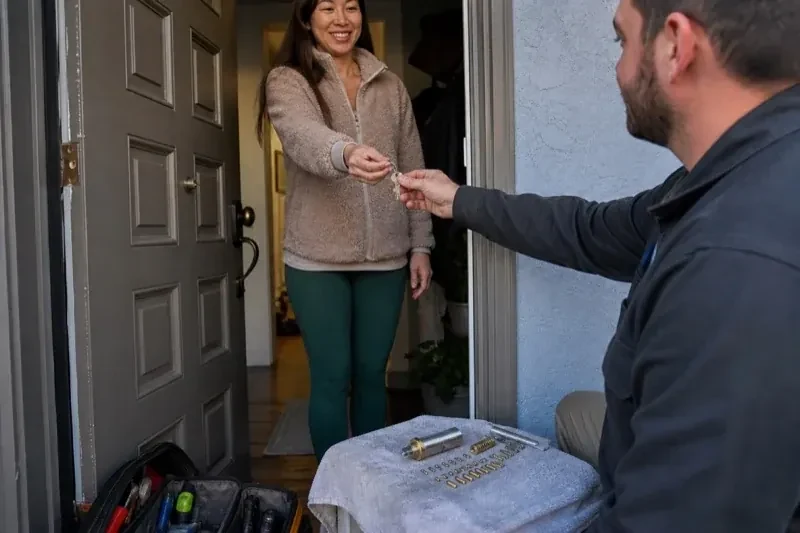
Two people exchanging a key at an open front door, with a disassembled lock cylinder and small parts arranged on a cloth nearby. — Lost Keys — Same-Visit Rekey, Toronto

Lockouts · Toronto

Lost Keys — Same-Visit Rekey

Your purse was taken from the back of a chair at a restaurant. The cards can be cancelled by phone tonight, but the house keys were in the side pocket beside a driver's licence that shows exactly where those keys fit.

In plain words

The first useful move after losing a key is to think about where it worked rather than where it went. A house key commonly opens more than the front door: the back door, a side entrance, the door from the garage into the house, a shed, a gate padlock, sometimes a storage room or a mailbox. A same-visit rekey starts by listing those openings, then treats the ones that are yours to change and points you to the right person for the ones that belong to a landlord, a condominium or the postal service. Every cylinder on the list leaves the visit taking a new key.

Sound familiar?Toronto

The call
You were shovelling the driveway after dark and the ring must have slid out of your coat pocket somewhere under a metre of snow. You have raked the whole bank with a flashlight. It will turn up in April, and you would rather not wait.
NextHow the visit goes

Lost Keys — Same-Visit Rekey · Toronto

How the visit goes

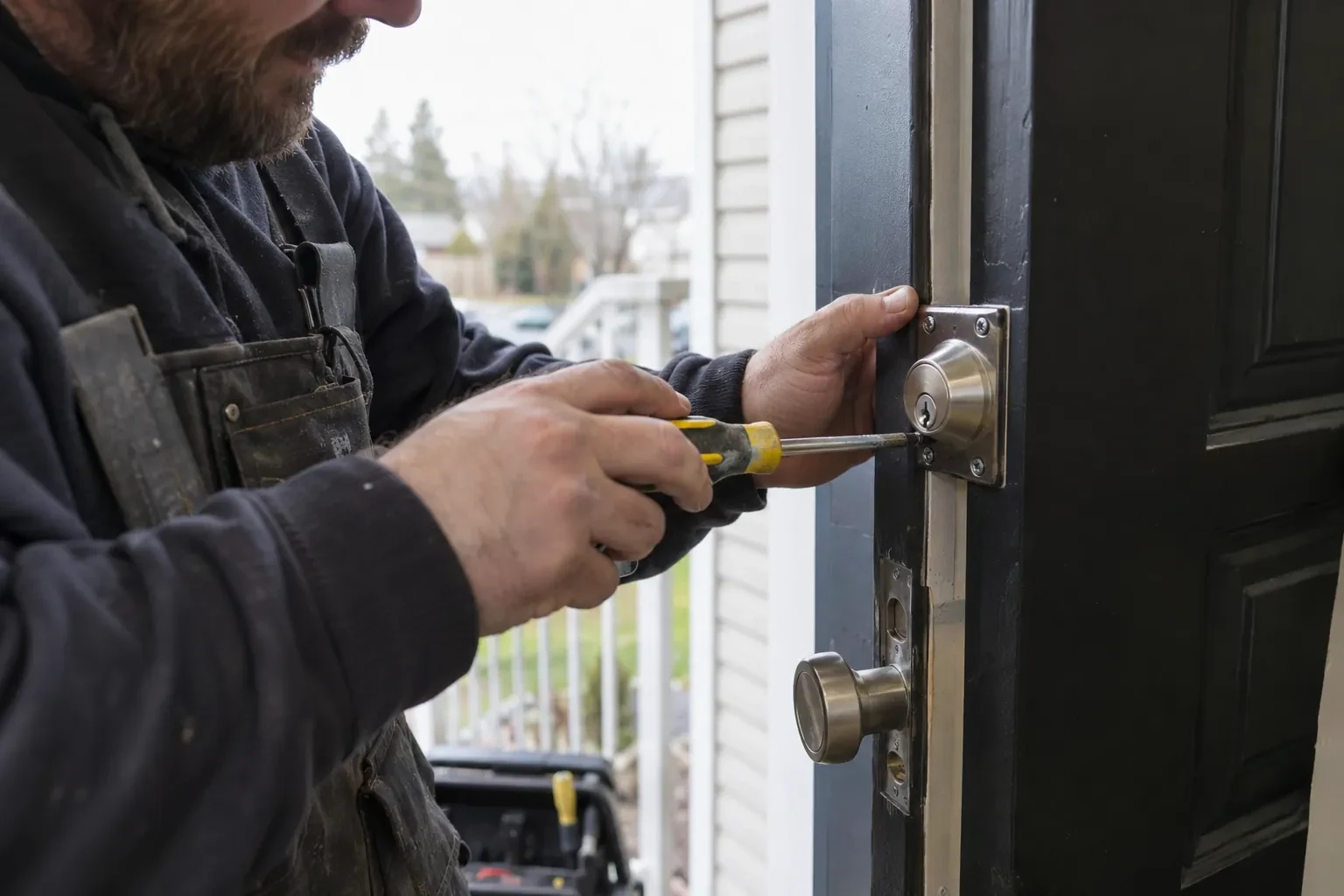
Hands using a yellow-handled screwdriver at a steel deadbolt plate on a dark door, with a steel knob below.
  1. Scene 1

    Which cylinders the key actually opened

    The locksmith walks the property with you and tries to think like the key. Front door deadbolt and handle, the back door, a side door, the door between the garage and the house, the shed, a gate padlock, a basement walkout, the door to a storage room or workshop. Each cylinder the missing key fitted goes on a list. Anything it fitted that is not yours to change goes on a second list: a shared lobby door, a parking gate, a community mailbox compartment, a workplace. The first list becomes the scope of the visit; the second becomes a set of calls you can make with the locksmith's help while the work goes on.

  2. Scene 2

    Removing the cylinder without disturbing the door

    Each cylinder comes off in the way its lock allows, and the door itself is never cut or drilled. A knob or lever lock releases its cylinder once the knob is slipped off its spindle and a retaining clip or cap is eased back. A deadbolt cylinder comes out when the interior thumb-turn assembly is unscrewed and the housing lifts away. A mortise cylinder in an older door backs out after its small set screw is loosened, and a rim cylinder on a night latch unscrews from its back plate. Each piece is set aside with its own screws so the door goes back together exactly as it was.

  3. Scene 3

    The old key is now a piece of brass

    Whatever became of the lost key, it stopped mattering the moment the last cylinder went back on the door. It still slides into the keyway, because the keyway did not change, but the pins inside no longer line up with its cuts, so it turns nothing. Whoever finds it in a snowbank in April, or already has it in a drawer, holds a shape that fits your lock and does nothing to it. That is the whole purpose of the visit, and it is worth pausing on: the worry that started the day has a definite ending, and you can watch it demonstrated with the old key in your own hand.

In the van

  • Key gauge and decoder
  • Dry graphite or PTFE lubricant
  • Key blanks in common keyways
  • Top pins and cylinder springs
  • Plug follower set

What shapes the quoteNorth Park Locksmith Co.

How many cylinders are on the list
A front door with a deadbolt and a handle is two cylinders. Add the back door, the garage entry, a side door and a shed and the count climbs, and the quote follows the number of cylinders repinned.
Master-keyed building cylinders
A condominium or apartment suite cylinder on a building master system is pinned so the master still works, which takes coordination with management and a little more time than a stand-alone house door.
Restricted or high-security keyways
Patented and high-security cylinders carry more parts, need dedicated pin kits and issue keys through authorised channels. Rekeying them takes longer and the blanks cost more than common residential ones.

FeesSame any hour

Have it ready

Before you call · 0 / 3

(289) 536-9733

Let's clear a few things up

Can a rekey be done in winter, and will the locks freeze afterwards?

Winter is a normal time for this work. Cylinders come off the door and are pinned in the van, out of the wind, and go back on with a dry graphite or PTFE lubricant that sheds moisture rather than holding it the way oil does. A cleaned, dry-lubricated cylinder is less likely to freeze than the gritty one it replaced. Keeping a storm door closed over the main lock helps through freeze-thaw weeks.

Can all my doors work on one key afterwards?

Usually, yes. Cylinders that share a keyway family accept the same blank, so they can be pinned to one combination during the rekey. The front door, back door, garage entry and a gate padlock of the same family become a single key. Where a door uses a different family, the locksmith can swap its cylinder for a compatible one in the same visit, or you can choose to keep two keys for that door.

Does the locksmith need to see the actual lost key, or just look at the lock?

Just the lock, and the door it is fitted to. A rekey works on the cylinder itself: the locksmith opens it, fits a new set of pins matched to a fresh key, and the old key stops working the moment that is done, whether or not it ever turns up again. Knowing roughly how the old key looked, cut on both edges, a chip on the head, a certain brand, can still help identify which cylinders in the house shared that key.

Torontoinformation

TorontoOntario

Lost Keys — Same-Visit Rekey · Downsview, North Park

Town
Toronto
In business
24 years
Hours
Open 24/7
Nights, weekends and holidays, same fees
Visits
On-site assessment preferred. Request a visit or call.

2021 census: what it means at the door

Every square is one home in a hundred.

  • 58 in 100 homes · older homes
  • About 58% of homes in Toronto were built in 1980 or earlier, according to the 2021 Census.Established homes often have non-standard bores and backsets from an earlier generation of hardware. A locksmith working in such an area carries adapter plates and cylinders in the older sizes, so an upgrade fits the existing door instead of forcing a new one.
  • Single-detached houses make up about 23% of homes in Toronto (2021 Census).Where most people live in townhouses, apartments or condos, doors come in two kinds: the suite door you control and the shared entrances the building manages. A locksmith works on your door freely and coordinates with management on the rest.

Source: Statistics Canada, Census Profile

Open Toronto in Google Maps

On-site assessment

Request a visit.

Your purse was taken from the back of a chair at a restaurant.

(289) 536-9733, open 24/7.