Sound familiar?Toronto
- The call
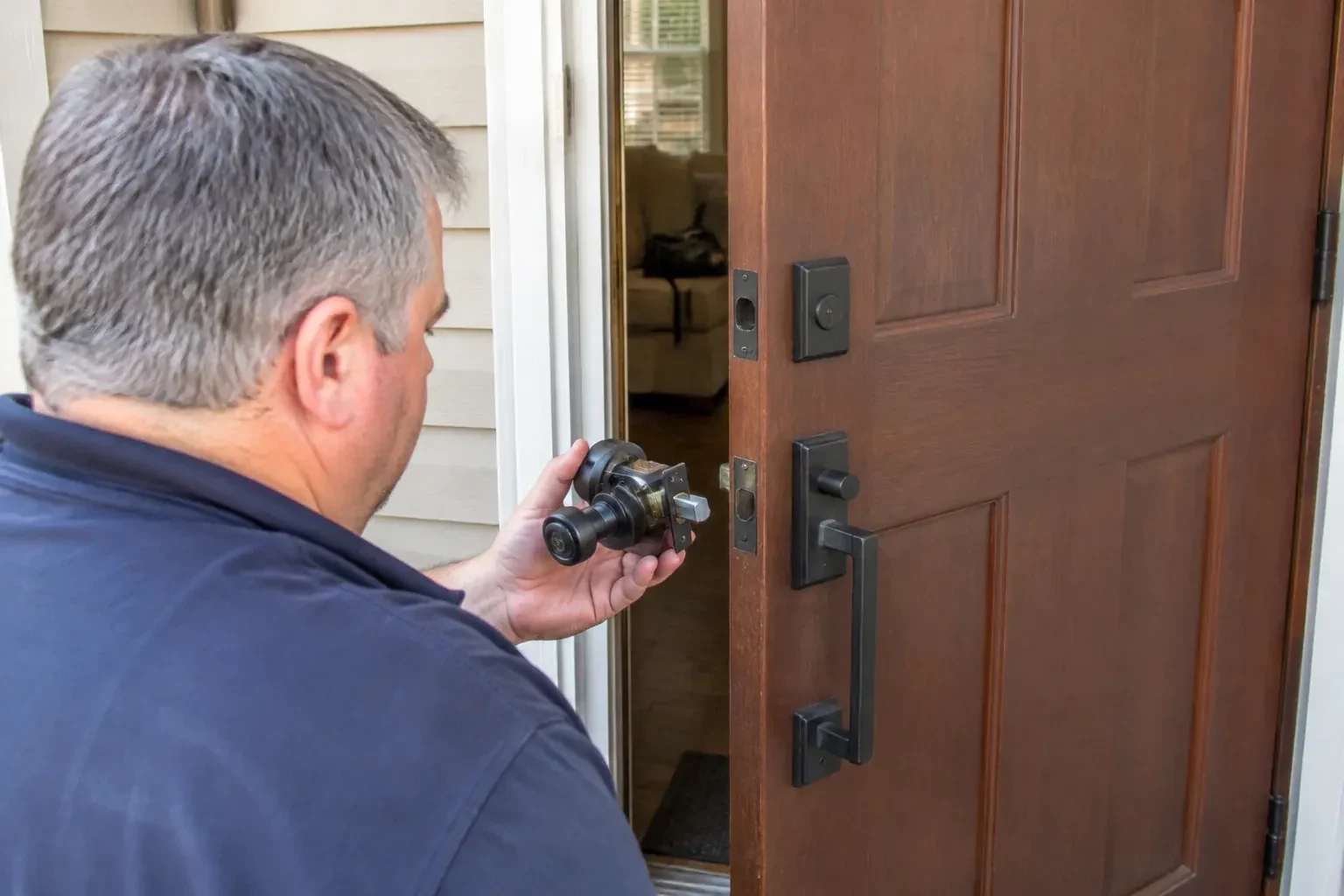
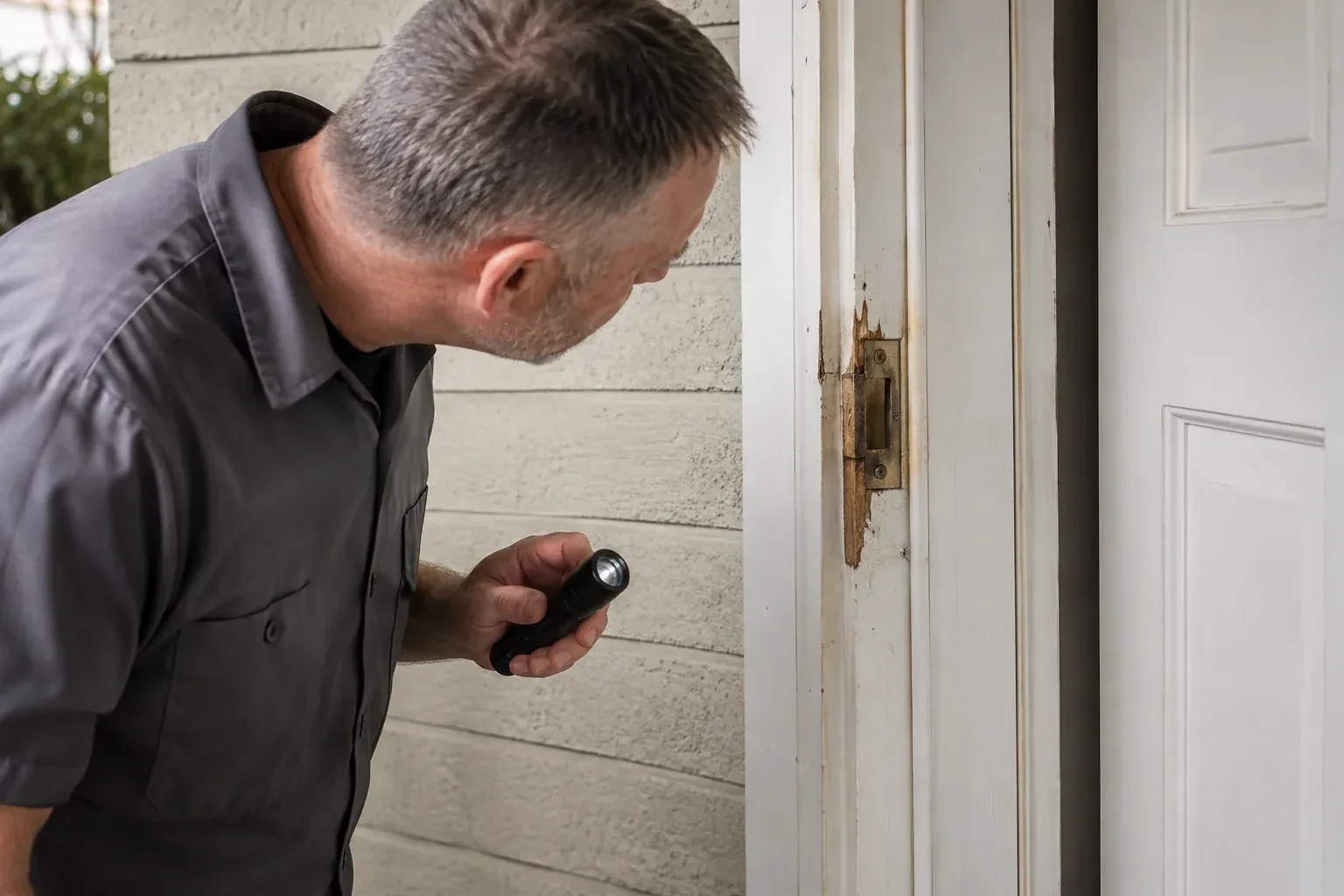
- They did not get in. The attempt left a screwdriver gouge in the door edge, a strike plate bent outward and a deadbolt that now needs a shove to throw. The lock held, but the door is telling you it was tested.
There is a hole where the cylinder used to be. Somebody twisted it out of the deadbolt with a wrench, and now the empty bore looks straight through to the kitchen, with the bolt still stuck in the frame.
Most forced doors fail at the frame, not the lock. A standard strike plate is held by two short screws in a softwood jamb, and a kick transfers the whole force of a body to those screws. The bolt usually survives; the wood around it does not. Swapping the deadbolt for a heavier one leaves the weak point untouched, so a proper break-in repair rebuilds the strike side with a boxed strike, a pocket cut to full depth and three-inch screws that pass through the jamb and the shim space into the stud behind. The lock is replaced too, but the frame is where security returns.
Sound familiar?Toronto
Break-In Damage Lock Repair · Toronto
Scene 1
Three components can fail in a forced entry and they are repaired differently, so the locksmith sorts them out before quoting. Lock failure is a broken cylinder, bolt or latch and is answered with hardware. Frame failure is a torn strike or split jamb and is answered with a boxed strike, repair plates, long screws and sometimes new wood. Door failure is a crushed edge, a split around the bore or a bent hinge leaf and is answered with edge reinforcement or, when the slab itself is broken, a door installer. Naming which of the three happened, and often all three, shows you what the locksmith completes tonight and what is handed to another trade.
Scene 2
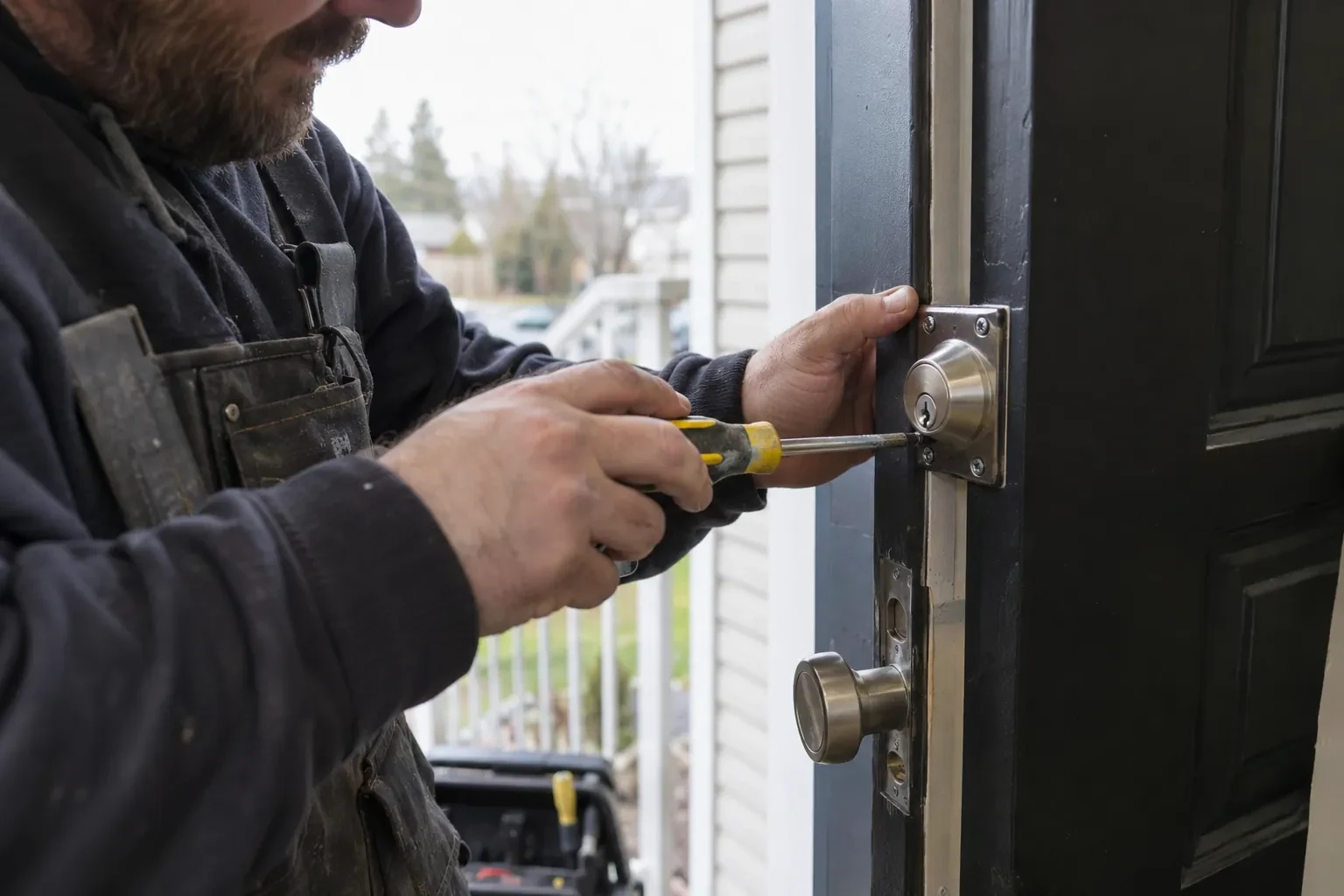
Before anything permanent, the door has to close and lock. Where the slab and frame are sound, a new deadbolt or cylinder goes straight in and the job moves on to reinforcement. Where the jamb is split, a steel repair plate is screwed over the break to hold the wood together and give the strike something to bite, or the strike is boxed and screwed into the stud behind the damage. Where the frame or door is too broken for hardware, plywood is fitted across the opening with cleats from inside, arranged so the household can still get out without a key. You know before the locksmith leaves exactly how the door is being held.
Scene 3
You are left with a plain written account: which opening was forced, what was found damaged, what was replaced, what was reinforced and with what, which locks were rekeyed and how many keys were cut, and what remains for another trade. The photographs taken before work began sit alongside it. The broken hardware is bagged for the adjuster unless you say otherwise, and the receipt for the securing visit goes in the same folder, since insurers ask policyholders to keep damaged property and receipts. Together these turn a stressful evening into a claim file that answers questions before they are asked.
What shapes the quoteNorth Park Locksmith Co.
FeesSame any hour
Most forced doors lock again during the visit. If the slab and frame are sound, a new lockset goes in and the strike is reinforced. If the jamb is split, a repair plate or a boxed strike screwed into the stud usually holds it. Boarding is reserved for openings where the frame or the door itself is destroyed, and even then it is fitted so the household can get out from inside without a key.
Mostly not. A boxed strike sits flush in the jamb, long screws hide behind hinge and strike plates, and a repaired jamb is filled and dressed so paint or stain covers it. A wrap-around door edge reinforcer is the one part that shows, as a slim steel band at the lock, and it can be finished to match the hardware. New deadbolts are matched to the trim on your other doors where you want them to blend in.
The door is left as found until the police have seen it or said they will not attend. What can happen in the meantime is planning: the locksmith can look at the damage, photograph it, measure for hardware and prepare the temporary securing so that the moment the scene is released the work begins. Nothing is removed or moved before then, because the marks on the door are part of the report.
TorontoOntario
Break-In Damage Lock Repair · Downsview, North Park
Every square is one home in a hundred.
On-site assessment
There is a hole where the cylinder used to be.
(289) 536-9733, open 24/7.
On-site assessment preferred · (289) 536-9733, open 24/7