Sound familiar?Toronto
- The call
- The bike came home from its previous owner with a single worn key that starts the engine but does nothing for the seat latch or the fuel cap, both of which answer to keys nobody handed over.
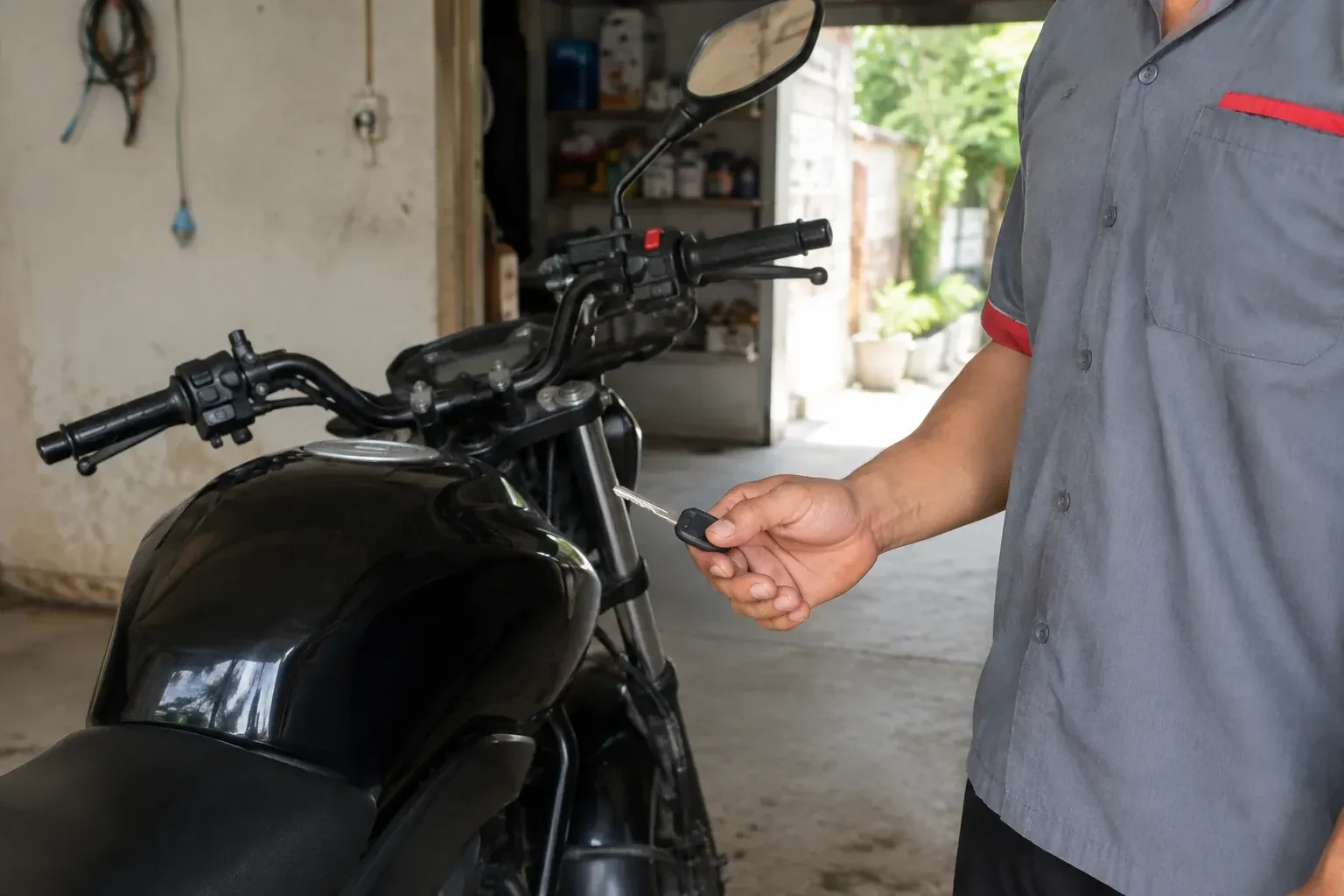
You dig through every jacket pocket and the tank bag twice, but the ignition key that always sits on the same ring is nowhere to be found. The bike sits exactly where you parked it, and nothing in reach will turn that lock.
Sometimes the machine is not the problem; the key is. A blade that has worn thin, bent slightly, or been copied one generation too many stops lifting the wafers cleanly, which shows up as a key that needs a wiggle or a lift to turn. Rather than living with an unreliable copy, a fresh key cut directly from the lock's code or read from the original wafers restores a clean, consistent turn, and the worn key can be retired instead of carried as a backup that may not work when needed.
Sound familiar?Toronto
Motorcycle & Scooter Keys · Toronto
Scene 1
Locks that live outdoors on a machine take on grit, road salt and moisture in a way that an indoor lock never does, and the locksmith checks the lock face and keyway for rust, stiffness and a gritty feel before cutting anything. A lock with corrosion inside the wafers can defeat even a correctly cut key until it is cleaned and lubricated, so this check decides whether the visit stays a straightforward key job or also needs the lock itself serviced before a new key is tested against it.
Scene 2
When a working key exists, even a spare or a worn original, the more direct route is to read its cuts on a code machine or trace them by hand and cut a fresh blank to match. The new key is checked against the old one under a light before it goes anywhere near the ignition, since a slight misread shows up as a key that almost turns but does not quite lift every wafer. Cutting from a known key is usually the shorter part of the visit, leaving more time for any other locks that need the same treatment.
Scene 3
Where locks were rekeyed rather than simply cut around, whoever holds an old key is left with a blade that fits the keyway but normally will not turn the plug once it is rekeyed. That is worth mentioning to anyone who previously had access to the machine, such as a former co-owner or a shop that kept a copy on file, since the new combination makes their old key no more useful than a spare piece of metal. Keeping the new keys distinct in a bag or on a labelled ring avoids mixing them up with anything cut before the visit.
What shapes the quoteNorth Park Locksmith Co.
FeesSame any hour
Where the key itself holds a battery, such as a fob-style key, a simple battery swap is tried first and is the more common explanation for a dead-seeming key. Where the chip sits in a passive key with no battery of its own, the locksmith checks whether the ignition recognises the chip at all using diagnostic equipment, which distinguishes a genuinely failed or unpaired chip from an unrelated electrical fault elsewhere on the machine.
It is worth acting on rather than living with. A key that needs a lift or a wiggle usually means the wafers inside the lock, or the key itself, have worn slightly out of true, and that wear tends to progress rather than stay the same. A fresh key cut from the original, or a light service of the lock, generally restores a clean turn well before the point where the key stops working altogether.
It starts the same way and adds one step. The broken piece is drawn out with tools made to grip it rather than push it deeper, and the ignition is then checked to see whether the break was a one-off or a sign the lock itself needs attention. A new key is generally cut from the two pieces or by decoding the lock, since a weakened copy could break again in the same spot.
TorontoOntario
Motorcycle & Scooter Keys · Downsview, North Park
Every square is one home in a hundred.
On-site assessment
You dig through every jacket pocket and the tank bag twice, but the ignition key that always sits on the same ring is nowhere to be found.
(289) 536-9733, open 24/7.
On-site assessment preferred · (289) 536-9733, open 24/7